
Technical Report
多节点 Disaggregated 推理:在 AMD Instinct MI300X GPU 上运行 DeepSeek R1 671B
March 17, 2026
本文档由AI自动翻译。内容可能存在不准确之处,如有需要请参阅英文原文。 查看英文原文
引言
自回归 LLM 推理包含两个截然不同的阶段:prefill 阶段并行处理整个输入 prompt 以构建 KV cache, 以及 decode 阶段利用缓存的 key 和 value 逐个生成输出 token。 这两个阶段具有截然不同的执行特性 — prefill 在单次长时间运行的步骤中一次性处理大量 token, 而 decode 则以高频率运行许多短迭代 — 然而在传统服务系统中,它们共享相同的 GPU 资源, 导致相互干扰,降低了吞吐量和延迟表现。
Prefill-decode disaggregation(也称为 disaggregated serving)通过将每个阶段分配到专用的 GPU 节点池来解决这一问题,使 prefill 和 decode 不再在相同的 GPU 上竞争资源。 该概念最早由 DistServe(Zhong 等人,OSDI 2024)正式提出,此后得到了广泛采用, 但要在生产环境中充分发挥其潜力,需要高度优化的全栈软件解决方案 — 从内核级计算效率 到集群级调度和 KV cache 传输。
在本报告中,我们使用 MoAI Inference Framework — Moreh 针对 AMD GPU 上高性能 disaggregated serving 优化的生产级推理框架 — 在运行 DeepSeek R1 671B 的 5 节点 AMD Instinct MI300X 集群上测量 prefill-decode disaggregation 的效果。我们首先展示 disaggregated serving 相对于 colocated 基线的优势,然后通过比较两种配置来研究最佳 prefill 与 decode 节点比例如何随请求模式变化:2P3D(2 个 Prefill + 3 个 Decode 节点) 和 1P4D(1 个 Prefill + 4 个 Decode 节点)。
背景:为什么要分离 Prefill 和 Decode?
干扰问题
当 prefill 和 decode 在相同的 GPU 上 colocated 运行时,它们会以多种方式相互干扰:
- 延迟尖峰。 Prefill 在单次可能长时间运行的 GPU 步骤中一次性处理大量 token。 当长上下文的 prefill 请求到达时,它会长时间占用 GPU,阻塞所有共享同一设备的正在进行的 decode 迭代。这会导致 P99 inter-token latency (ITL) 大幅膨胀 — 有时高达数个数量级 — 破坏用户期望的流畅流式体验。
- 调度冲突。 Prefill 和 decode 具有相反的调度偏好:prefill 希望快速处理 新请求以最小化 time-to-first-token (TTFT),而 decode 需要频繁且不间断的迭代来维持低 inter-token latency。单个服务实例必须在两者之间不断仲裁,任何妥协都会降低至少一个指标。
- 耦合扩展。 运维人员无法独立增加 prefill 或 decode 容量; 每个新节点都必须同时服务两个阶段,导致瓶颈较小的阶段被过度配置。
Disaggregated Serving 的工作原理
Disaggregated serving 将集群分为独立的 prefill 节点和 decode 节点。每个池持有完整的 模型权重(不存在跨池的模型分片),但只处理其指定的阶段。当 prefill 节点完成输入处理后, 它通过高带宽互联(如 RDMA)将生成的 KV cache 传输到 decode 节点, 后者随即在无干扰的情况下继续 token 生成。
这种分离带来了几个关键优势。即使在同构集群(每个节点拥有相同的 GPU)上, disaggregation 也能提供:
- 消除 prefill-decode 干扰。 Decode 节点以稳定的速率生成 token, 不受传入 prefill 工作的干扰,从而实现显著更低且更可预测的 inter-token latency。
- 独立扩展。 运维人员可以调整 prefill 与 decode 的节点比例以匹配工作负载的 输入/输出长度分布,避免过度配置。
- 按阶段优化。 每个池可以独立应用不同的并行化策略、调度策略和批处理配置, 针对其阶段进行调优,而不会影响另一个阶段。
在异构集群中,disaggregation 解锁了额外的优化维度:由于 prefill 是计算密集型而 decode 是 内存带宽密集型,运维人员可以将计算密集型 GPU 分配给 prefill 池,将带宽优化的 GPU 分配给 decode 池,使硬件特性与每个阶段的瓶颈相匹配。本报告聚焦于同构 AMD MI300X 集群, 将干扰消除、扩展和按阶段优化的收益与任何硬件组合效应隔离开来。
实验设置
测试环境
所有实验均在 5 节点 GPU 集群上进行。每个节点为 Gigabyte G593-ZX1-AAX1 服务器, 配备双路 AMD EPYC 9474F CPU(48 核,3.6 GHz)、2,304 GB 主内存和 8 块 AMD Instinct MI300X GPU(每块 192 GB HBM3e)。节点间通过 InfiniBand HDR 互联。
| Category | Specification |
|---|---|
| Server | Gigabyte G593-ZX1-AAX1 × 5 nodes |
| CPU | 2× AMD EPYC 9474F (48-core, 3.6 GHz) per node |
| Memory | 2,304 GB per node |
| GPU | 8× AMD Instinct MI300X (192 GB HBM3e) per node, 40 GPUs total |
| Interconnect | InfiniBand HDR |
| OS | Ubuntu 22.04.4 LTS |
| Model | DeepSeek R1 671B (MoE) |
| Precision | FP8 |
| Parallelism | Expert Parallelism (EP8) + Data Parallelism (DP8) per node |
| Inference Engine | Moreh vLLM (within MoAI Inference Framework) |
配置方案
我们在同一 5 节点集群上评估了三种配置:
- Colocated(基线): 所有 5 个节点同时处理 prefill 和 decode。 负载均衡在各节点间分配请求。
- Disaggregated 2P3D: 2 个节点专用于 prefill,3 个节点专用于 decode。 相对于 1P4D,为 prefill 分配了更多容量。
- Disaggregated 1P4D: 1 个节点专用于 prefill,4 个节点专用于 decode。 相对于 2P3D,为 decode 分配了更多容量。
基准测试场景
所有基准测试均使用 vllm bench serve 运行。 我们在不同并发级别下测试了四种 ISL/OSL(Input Sequence Length / Output Sequence Length) 组合。这些组合旨在对服务管线的不同部分施加压力,而非模拟特定应用:
- 1K/1K: 输入和输出长度均衡
- 1K/8K: 短输入,长输出(decode 密集型)
- 8K/1K: 长输入,短输出(prefill 密集型)
- 8K/8K: 长输入和长输出
对于每个场景,流量负载由两个参数控制:N_REQs(请求总数)和 REQ_RATE(请求到达速率,单位 req/s)。 在所有场景中,N_REQs 设为并发级别的 2 倍。短输出场景的 REQ_RATE 设置较高 (1K/1K 为 3–6 req/s,8K/1K 为 2–4 req/s),长输出场景的 REQ_RATE 设置较低 (1K/8K 和 8K/8K 为 2 req/s),这反映了长生成请求占用 GPU 资源时间更长的事实。 一旦指定 REQ_RATE,它 — 与 N_REQs 一起 — 比名义并发级别更精确地决定了 实际流量模式。
结果:Disaggregated 与 Colocated Serving 对比
我们首先比较 disaggregated 2P3D 配置(2 个 prefill + 3 个 decode 节点)与 colocated 基线 (所有 5 个节点同时处理两个阶段)。由于集群 40% 的计算资源保留给 prefill,2P3D 作为我们在 所有四个 ISL/OSL 场景中的主要 disaggregation 配置。
端到端延迟
在所有测试配置中,Disaggregated 2P3D 在中位端到端延迟方面实现了 1.35 倍的几何平均改善。
| Scenario | CON | N_REQs | REQ_RATE | Colocated E2EL (s) | 2P3D E2EL (s) | Improvement |
|---|---|---|---|---|---|---|
| 1K/1K | 160 | 320 | 3 | 88.11 | 68.18 | 1.29x |
| 1K/1K | 320 | 640 | 5 | 103.00 | 73.62 | 1.40x |
| 1K/1K | 480 | 960 | 6 | 127.45 | 79.03 | 1.61x |
| 8K/1K | 160 | 320 | 2 | 141.74 | 77.04 | 1.84x |
| 8K/1K | 320 | 640 | 3 | 171.49 | 94.48 | 1.81x |
| 8K/1K | 480 | 960 | 4 | 208.43 | 118.51 | 1.76x |
| 1K/8K | 160 | 320 | 2 | 575.83 | 549.46 | 1.05x |
| 1K/8K | 320 | 640 | 2 | 665.46 | 596.69 | 1.12x |
| 1K/8K | 480 | 960 | 2 | 719.67 | 665.85 | 1.08x |
| 8K/8K | 160 | 320 | 2 | 656.52 | 582.00 | 1.13x |
| 8K/8K | 320 | 640 | 2 | 760.98 | 636.52 | 1.20x |
| 8K/8K | 480 | 960 | 2 | 889.59 | 738.50 | 1.20x |
| Geometric Mean | 1.35x | |||||
最大增益出现在 8K/1K(prefill 密集型)场景中,在 CON=160 时达到 1.84 倍。 这是预期的结果:有了专用的 prefill 节点,长输入序列不再阻塞 decode 操作, prefill 节点可以更高效地批处理和处理这些序列。
总吞吐量
Disaggregated 2P3D 在总吞吐量(每秒 token 数)方面实现了 1.20 倍的几何平均改善。
| Scenario | CON | N_REQs | REQ_RATE | Colocated TPS | 2P3D TPS | Improvement |
|---|---|---|---|---|---|---|
| 1K/1K | 160 | 320 | 3 | 2,865.69 | 3,329.94 | 1.16x |
| 1K/1K | 320 | 640 | 5 | 5,162.46 | 6,270.40 | 1.21x |
| 1K/1K | 480 | 960 | 6 | 6,457.95 | 8,415.03 | 1.30x |
| 8K/1K | 160 | 320 | 2 | 8,606.33 | 11,781.94 | 1.37x |
| 8K/1K | 320 | 640 | 3 | 13,832.82 | 19,795.51 | 1.43x |
| 8K/1K | 480 | 960 | 4 | 17,883.09 | 24,689.61 | 1.38x |
| 1K/8K | 160 | 320 | 2 | 2,363.14 | 2,463.28 | 1.04x |
| 1K/8K | 320 | 640 | 2 | 3,906.88 | 4,348.48 | 1.11x |
| 1K/8K | 480 | 960 | 2 | 5,341.88 | 5,668.40 | 1.06x |
| 8K/8K | 160 | 320 | 2 | 3,739.94 | 4,145.35 | 1.11x |
| 8K/8K | 320 | 640 | 2 | 6,091.02 | 7,322.27 | 1.20x |
| 8K/8K | 480 | 960 | 2 | 8,107.45 | 9,245.05 | 1.14x |
| Geometric Mean | 1.20x | |||||
延迟与吞吐量对比
以下散点图展示了每个 ISL/OSL 场景的延迟-吞吐量权衡。越靠近左上方(更低延迟、更高吞吐量) 越好。每个点代表不同的并发级别。
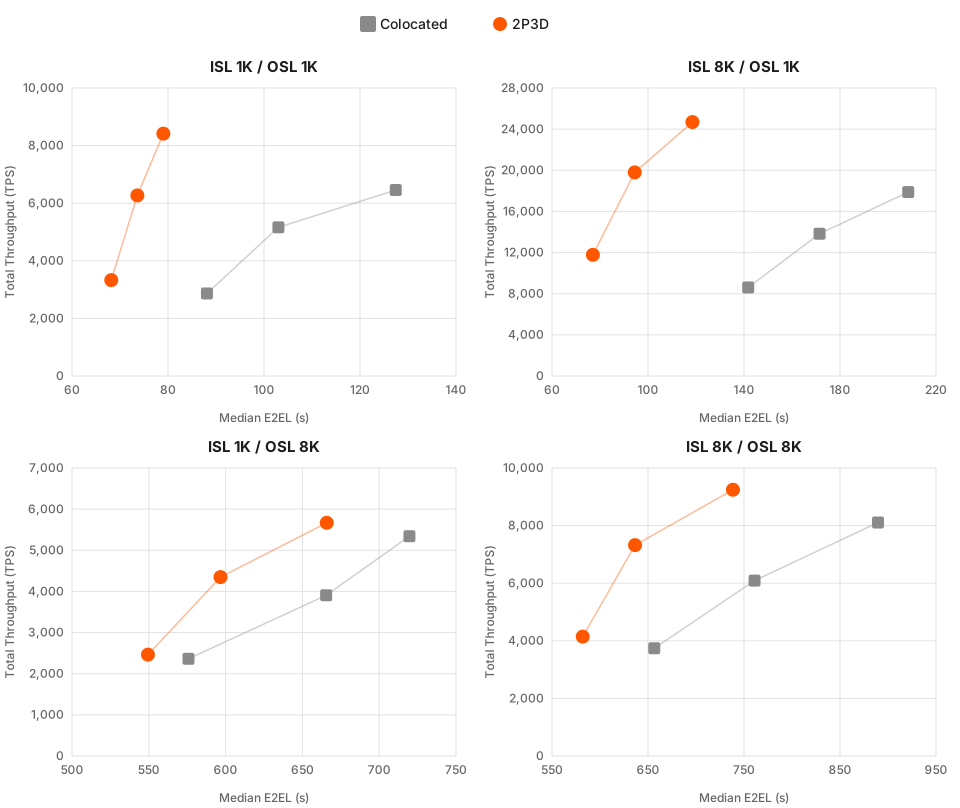
成本效率(Token/Dollar)
由于 disaggregated serving 使用的 GPU 总数与 colocated 基线相同,吞吐量的提升直接转化为 单位 token 成本的节省。2P3D 配置相对于 colocated 基线实现了 107.57% 的 token/dollar 效率几何平均值,这意味着运维人员可以用相同的基础设施成本多服务 7.57% 的 token。
结果:Prefill 与 Decode 比例的影响
在确立 disaggregated serving 优于 colocated serving 之后,我们进一步探讨:集群的节点应如何在 prefill 和 decode 之间分配?为回答这个问题,我们在 decode 密集型 1K/8K 场景中比较 2P3D 配置 (2 个 prefill + 3 个 decode)与 1P4D(1 个 prefill + 4 个 decode),因为在该场景中将一个 节点从 prefill 转移到 decode 的影响最为明显。
端到端延迟:2P3D vs. 1P4D (1K/8K)
| CON | N_REQs | REQ_RATE | Colocated E2EL (s) | 2P3D E2EL (s) | 1P4D E2EL (s) |
|---|---|---|---|---|---|
| 160 | 320 | 2 | 575.83 | 549.46 | 544.86 |
| 240 | 480 | 2 | 633.48 | 586.02 | 553.47 |
| 320 | 640 | 2 | 665.46 | 596.69 | 584.97 |
| 480 | 960 | 2 | 719.67 | 665.85 | 605.61 |
| Geomean Improvement | 1.08x | 1.13x | |||
总吞吐量:2P3D vs. 1P4D (1K/8K)
| CON | N_REQs | REQ_RATE | Colocated TPS | 2P3D TPS | 1P4D TPS |
|---|---|---|---|---|---|
| 160 | 320 | 2 | 2,363.14 | 2,463.28 | 2,462.89 |
| 240 | 480 | 2 | 3,129.68 | 3,404.86 | 3,518.22 |
| 320 | 640 | 2 | 3,906.88 | 4,348.48 | 4,456.96 |
| 480 | 960 | 2 | 5,341.88 | 5,668.40 | 6,082.84 |
| Geomean Improvement | 1.08x | 1.11x | |||
在这一 decode 密集型工作负载上,1P4D 始终优于 2P3D。额外的 decode 节点提供了更大的聚合 decode 容量,产生了更低的端到端延迟和更高的吞吐量 — 尤其是在高并发情况下, decode 成为瓶颈时。在 CON=480 时,1P4D 达到 6,082.84 TPS,而 2P3D 为 5,668.40 TPS。
成本效率对比
在 token/dollar 效率(几何平均值)方面,1P4D 达到 111.07%,而 2P3D 相对于 colocated 基线达到 107.57%。在 decode 密集型工作负载上,额外的 decode 节点直接转化为更好的成本效率。
总结:如何选择比例?
| 2P3D (2 Prefill + 3 Decode) | 1P4D (1 Prefill + 4 Decode) | |
|---|---|---|
| 优势场景 | Prefill 密集型场景(长输入) | Decode 密集型场景(长输出) |
| E2EL improvement, 8K/1K (geomean) | 1.80x | - |
| E2EL improvement, 1K/8K (geomean) | 1.08x | 1.13x |
| Token/Dollar, 8K/1K (geomean) | 139% | - |
| Token/Dollar, 1K/8K (geomean) | 108% | 111% |
| Prefill 容量 | 较高(2 个节点) | 有限(1 个节点) |
| Decode 容量 | 中等(3 个节点) | 较高(4 个节点) |
2P3D 在 prefill 密集型 8K/1K 工作负载上实现了 1.80 倍的几何平均延迟改善, 但在 decode 密集型 1K/8K 工作负载上其优势缩小至 1.08 倍。在该场景下, 1P4D 以 1.13 倍 E2EL 改善和 111% token/dollar 效率领先, 这得益于额外的 decode 节点。 在生产环境中,真实工作负载很少是均匀的 — 短查询、长上下文 RAG 和推理请求 同时到达,最佳比例可能随着全天流量模式的变化而变化。
这使得手动配置 prefill/decode 比例本质上是脆弱的:为高峰时段流量调优的比例在非高峰时段可能是 次优的,反之亦然。挑战不仅在于选择正确的比例,更在于持续地适应调整。
延迟稳定性:P99 Inter-Token Latency
Disaggregated serving 最具影响力的优势之一是尾部延迟的显著改善。在 colocated 设置中, 长 prefill 请求会间歇性地阻塞 decode 步骤,导致 P99 inter-token latency (ITL) 飙升至 数秒。这直接降低了流式应用中的用户体验。
通过 disaggregated serving,prefill 和 decode 永远不会竞争相同的 GPU 资源。 因此,P99 ITL 大幅下降:
| Scenario | CON | N_REQs | REQ_RATE | Colocated P99 ITL (ms) | Disaggregated P99 ITL (ms) | Reduction |
|---|---|---|---|---|---|---|
| 8K/1K | 160 | 320 | 2 | 3,921.21 | 77.61 | 50.52x |
| 8K/1K | 320 | 640 | 3 | 4,085.65 | 87.38 | 46.76x |
| 8K/1K | 480 | 960 | 4 | 4,172.20 | 115.97 | 35.97x |
| 1K/1K | 160 | 320 | 3 | 997.97 | 72.55 | 13.76x |
| 1K/1K | 320 | 640 | 5 | 1,007.54 | 78.96 | 12.76x |
| 1K/1K | 480 | 960 | 6 | 1,039.30 | 84.23 | 12.34x |
| Geometric Mean | 23.85x | |||||
这意味着通过 disaggregated serving,即使在混合工作负载条件下,用户也能体验到一致、流畅的 token 流式传输 — 这是生产级对话和推理应用的关键需求。
结论
Prefill-decode disaggregation 为大规模 MoE 模型推理提供了相对于 colocated serving 的 明确且可衡量的增益。在运行 DeepSeek R1 671B 的 5 节点 AMD MI300X 集群上:
- 两种 disaggregated 配置在所有测试场景中均优于 colocated 基线,端到端延迟改善最高达 1.84 倍,P99 inter-token latency 降低 12–51 倍。
- 2P3D(更多 prefill 节点)在 prefill 密集型工作负载上表现优异, 在 8K/1K 上实现 1.80 倍几何平均 E2EL 改善。
- 1P4D(更多 decode 节点)在 decode 密集型工作负载上提供更好的成本效率, 在 1K/8K 上达到 111% token/dollar。
然而,最佳 prefill 与 decode 比例并非静态的 — 它取决于工作负载的输入/输出长度分布 和并发度,而这两者在生产环境中都会随时间变化。选择错误的比例会导致 prefill 或 decode 容量利用不足,侵蚀 disaggregation 所带来的收益。
MoAI Inference Framework 通过自动化 disaggregated serving 的配置来解决这一问题。 MoAI 无需运维人员手动选择和维护固定的 prefill/decode 比例,而是根据观察到的工作负载特性 动态调整分配 — 同时结合 expert parallelism、路由和其他分布式推理优化 — 使运维人员无需手动调优即可在 AMD Instinct GPU 集群上充分实现 disaggregation 的全部收益。